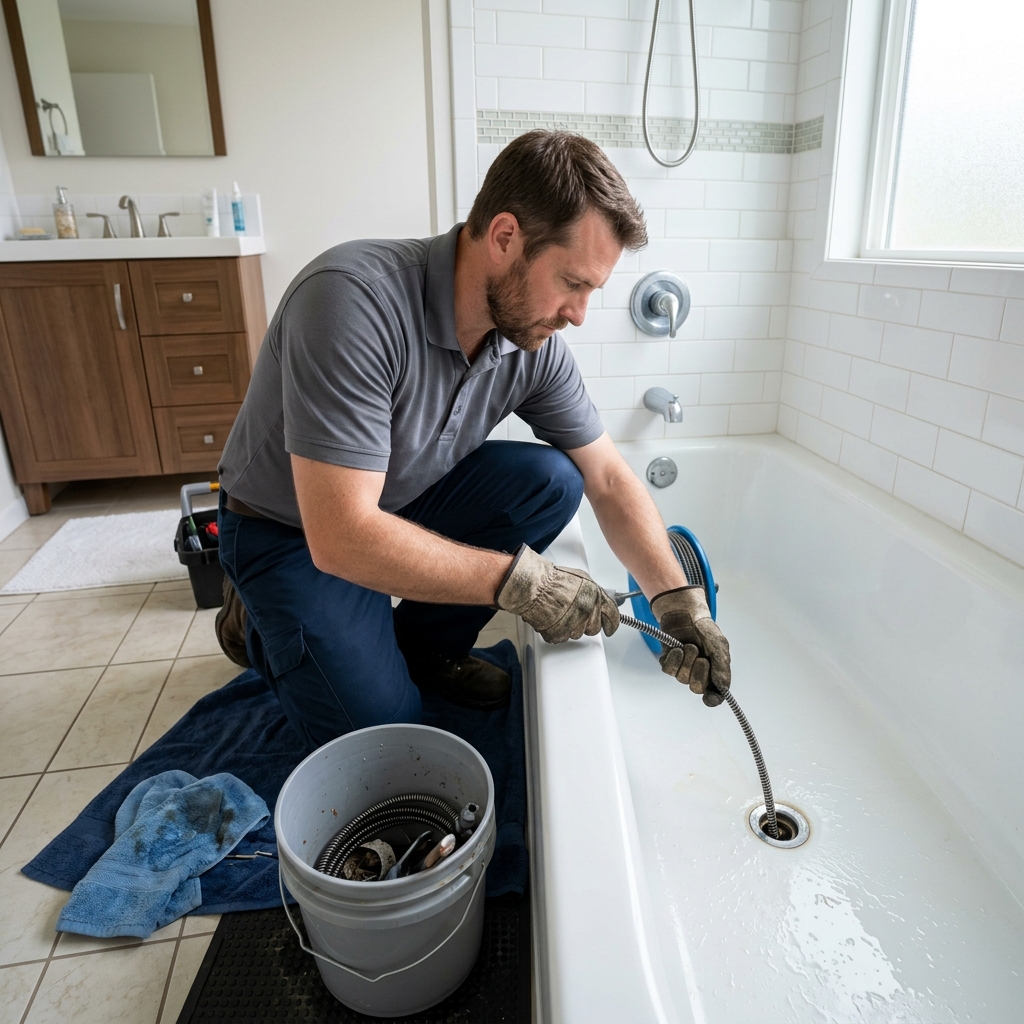
Bathroom drains take a beating in McAllen. Heat and humidity are year-round. Hard water leaves mineral deposits on everything it touches. Hair, soap scum, and buildup stack up fast inside bathroom drain pipes. We handle drain unclog service across McAllen and the Rio Grande Valley — sinks, showers, tubs, and floor drains.
If your drain is slow or backed up, we can clear it the same day. A slow drain is easier to fix than a full backup. Drain clearing is one of our bathroom remodeling services in McAllen.
Signs Your Bathroom Drain Needs to Be Unclogged
A drain rarely goes from fine to fully blocked overnight. These signs come first:
- Water drains slower than normal after you use the sink, shower, or tub
- Water pools around your feet during a shower
- A gurgling sound comes from the drain after water goes down
- A musty or sewer-like smell rises from the drain opening
- A slick or slimy film appears on the drain cover between uses
- Water backs up into the tub when you run the bathroom sink
A slow drain is a warning. A full backup is what happens when you ignore it.
What Causes Bathroom Drain Clogs in McAllen
Four things cause most bathroom drain clogs here. All four are worse in McAllen than in cities with softer water.
Hair. It’s the top cause in showers, tubs, and sinks. Loose hairs shed during bathing and grooming bind together inside the drain and on the stopper. They form a mat that traps everything else that comes after.
Soap scum. Bar soap is made with animal fat. When that fat contacts the calcium and magnesium in McAllen’s hard water, it reacts and forms a sticky, waxy residue. That residue coats the inside of pipes and holds hair against the walls.
Hard water mineral deposits. McAllen’s water measures 243 parts per million — a level the USGS classifies as very hard. Calcium ions settle inside drain pipes over time. They create a rough, narrower inner surface that catches hair and soap faster than a smooth pipe would.
Biofilm. Bacteria and organic matter combine inside drain pipes to form a slimy coating. It builds on top of soap scum and mineral deposits. McAllen’s warm, humid climate speeds this process up year-round. Biofilm is usually what creates the musty smell before a clog becomes severe.
Types of Bathroom Drains We Unclog
Bathroom sink drains. Sink drains are typically 1.25 inches wide. Clogs form at two spots: the pop-up drain stopper and the P-trap below. Hair, toothpaste, and grooming products are the main contributors. The pop-up mechanism collects debris on its moving parts.
Shower drains. Shower drains are 2 inches wide and handle more daily water than any other bathroom drain. Showering accounts for nearly 17% of indoor water use in the average home — about 40 gallons per day [1]. Hair is the main cause of shower drain clogs. It mats on the drain screen or just below it, then catches soap scum as water flows past.
Bathtub drains. Tub drains are typically 1.5 inches wide. They have an internal overflow mechanism — a linkage that runs inside the overflow pipe. Hair and soap collect on that linkage as well as in the main drain and P-trap below. Tub clogs are often more involved to clear than shower clogs because of this internal assembly.
Floor drains. Older McAllen homes and bathrooms in Palmhurst and downtown McAllen sometimes have floor drains. These clog from sediment and biofilm rather than hair. A floor drain that rarely gets used can also develop a dry trap. That lets sewer gas back in — a separate issue from clogging.
DIY vs. Calling a Professional
Some bathroom drain clogs are simple enough to handle yourself. Others need more than a plunger or a bottle of drain cleaner.
What you can try at home:
- Pull visible hair off the drain screen manually
- Remove the pop-up stopper in a sink drain and clean it under the faucet
- Use a basic hand drain snake on a single, shallow clog
- Flush the drain with hot water to soften soap buildup
Call us when:
- You’ve cleared the drain and it clogs again within a few days
- Two or more bathroom drains are slow at the same time
- You hear a gurgling sound in one drain when you run another
- The drain has a sewer smell after clearing
- Water from one fixture backs up into another
Not sure if the job calls for a handyman or a licensed plumber? Our minor plumbing service page breaks that down.
When a Slow Drain Means a Bigger Problem
One slow drain is almost always a single-fixture clog. But certain patterns point to something deeper.
Multiple slow drains at the same time. If the sink, shower, and tub are all draining slowly together, the clog is in a shared drain line. That’s not a fixture-level fix.
Gurgling after you flush or drain. That sound means air is being pushed back through a shared line from a blockage downstream.
Water appearing in one fixture when you run another. Water backing up into the tub when you run the sink, or the toilet gurgling when you drain the tub — these are shared line signs.
Sewer smell even after clearing a clog. This can point to a dry trap or a venting issue in the drain line itself.
The drain clogs again within a week. If it keeps coming back fast, hard water scale may have narrowed the pipe from the inside. A re-clog that fast needs an inspection, not just another clearing.
If it’s one drain that’s blocked, we clear it. If the pattern is bigger, we assess before we act. We serve homes across McAllen, Sharyland, Palmhurst, and the Rio Grande Valley.
Preventing Bathroom Drain Clogs in McAllen
Keeping drains clear is easier than clearing a full clog. A few habits help — especially here in South Texas where hard water makes buildup faster.
- Put a hair catcher on every shower and tub drain. This is the single best prevention step. Empty it after each shower.
- Clean your sink pop-up stopper once a month. That’s where most bathroom sink clogs start. Remove it, rinse it off, and put it back.
- Run hot water down the drain after each shower. Warm water helps flush soap residue before it sets.
- Use baking soda and white vinegar every few months. Pour baking soda down, follow with white vinegar, wait 15 minutes, then flush with hot water. This cuts soap and mineral buildup without damaging your pipes.
- Avoid liquid chemical drain cleaners for regular maintenance. They work on soft clogs but degrade rubber P-trap gaskets over time. They also don’t remove the root buildup — just punch a temporary hole through it.
- Descale more often than you think you need to. At 243 PPM, McAllen’s water deposits minerals faster than a soft-water city. What works on a six-month schedule elsewhere may need to happen every three months here.
Frequently Asked Questions
Why does my shower drain keep clogging?
Hair and soap scum are the most common cause. They mat together inside the drain or P-trap and need manual clearing. In McAllen, hard water speeds up the soap buildup that holds hair in place. A hair catcher and monthly cleaning break the cycle.
Is it safe to use Drano or liquid drain cleaner?
It can clear a soft clog once. But used regularly, chemical cleaners degrade the rubber seals inside your P-trap. They also dissolve the surface of the clog rather than removing the underlying buildup. If you’re reaching for the bottle repeatedly, the drain needs hands-on clearing.
Can a clogged drain damage my pipes?
The clog itself rarely damages pipes. But the standing water a clog creates can accelerate corrosion over time. Chemical cleaners used repeatedly are a real pipe risk — especially on older PVC or rubber-gasketed fittings.
Why does my bathroom drain smell bad even when it drains fine?
Biofilm is the likely cause. It’s a layer of bacteria and organic matter inside the pipe. A hot water flush with baking soda helps break it up. If the smell is more like sewer gas than musty, the floor drain trap may have dried out. Add water to refill the trap seal.
What is the difference between a slow drain and a clogged drain?
A slow drain has partial flow — water moves, just not fast. A clogged drain has no flow or immediate backup. Slow drains are easier to clear because the buildup hasn’t fully blocked the pipe yet. If you catch it slow, the fix is simpler than waiting for a full clog.
[1] U.S. Environmental Protection Agency — “Showerheads” (WaterSense) – https://www.epa.gov/watersense/showerheads
Need This Service?
Call now for a free estimate. Same-day service available in McAllen.