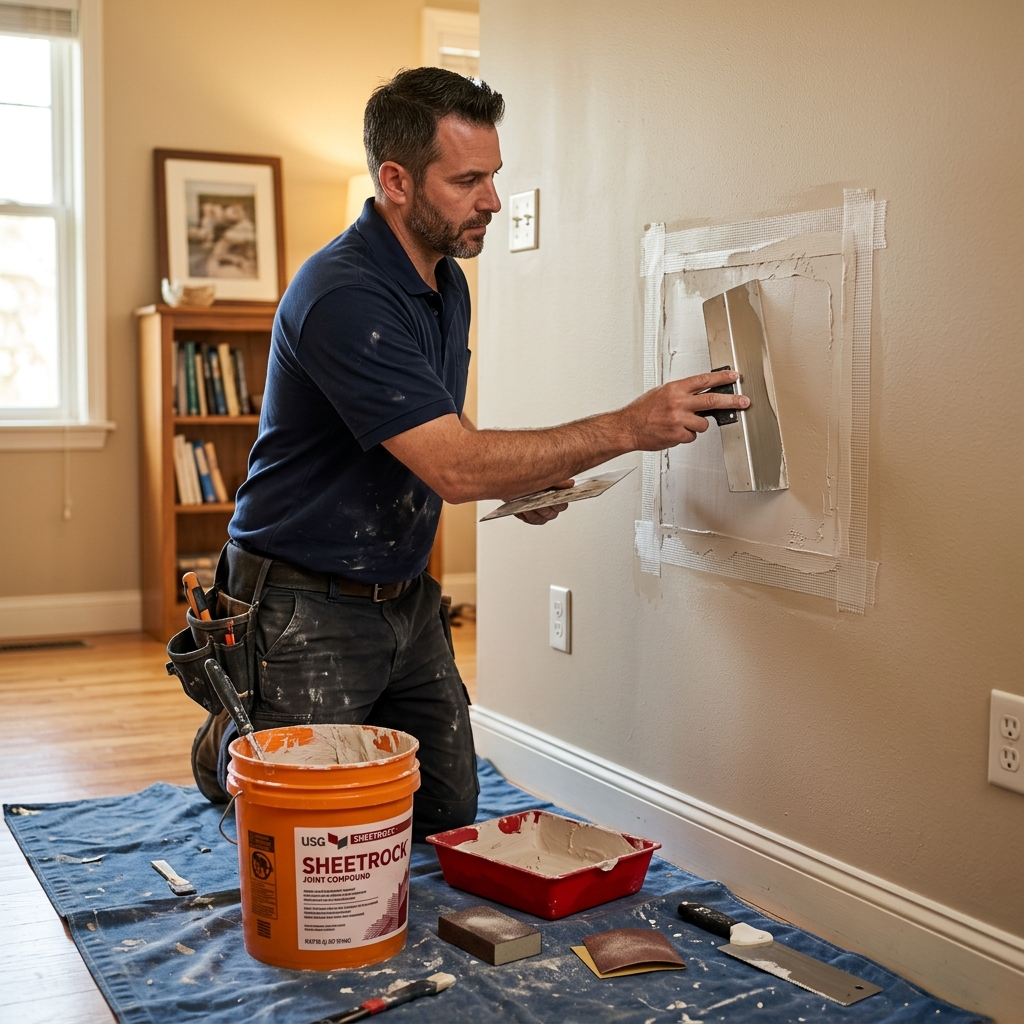
In McAllen, drywall takes a beating from both the climate and daily life. Humidity weakens it. Heat makes it expand and contract. Settling cracks show up in newer homes. Doorknobs punch holes through it. And when a pipe leaks behind the wall, the damage hides until it’s serious.
We handle drywall repair across McAllen, Sharyland, Palmhurst, and the Rio Grande Valley. Cracks, holes, nail pops, water damage, and settling damage — we fix it all. Most repairs are finished in a single visit. Same-day and next-day scheduling is available. Drywall repair is one of our property maintenance services in McAllen.
What Does Drywall Repair Include in McAllen?
Drywall repair covers fixing cracks, holes, nail pops, and water-damaged sections in your walls and ceilings. The goal is a smooth, invisible patch that matches the rest of the wall.
A typical repair includes:
- Assessing the damage and finding the cause
- Cutting out the damaged section if needed
- Applying a patch, backer board, or new drywall piece
- Taping the seams with joint tape
- Applying joint compound in thin coats
- Sanding smooth after each coat dries
- Priming and painting to match the wall
Most McAllen repairs we do are finished in one visit. Larger patches with multiple coats may need a second visit for sanding and paint.
Common Causes of Drywall Damage in McAllen
Drywall damage doesn’t always come from one big event. In McAllen, the climate is often the slow cause.
- Foundation settling. Newer homes in Sharyland and north McAllen settle in the first one to three years. That movement cracks drywall along seams, corners, and door frames.
- Water leaks. A leaking pipe, roof drip, or crack in the stucco exterior lets water reach the drywall. The damage may stay hidden for weeks.
- Humidity. Bathrooms, laundry rooms, and poorly ventilated spaces hold moisture [1]. Over time, that moisture softens the drywall.
- Physical impact. Doorknobs, furniture, and moving objects punch holes and leave dents. This is the most common call we get from rental property owners.
- Poor original work. Thin joint compound, missed tape, and bad seams from the original build show up years later as cracks and bubbles.
Types of Drywall Damage We Repair
Not all drywall damage looks the same. Here’s what we fix:
- Small holes — Nail holes, screw holes, and doorknob dents. Quick fills with spackle and a smooth finish.
- Medium holes — Fist-sized damage, plumbing access cuts, and patch failures. These need a backer board or new drywall piece.
- Long cracks — Runs along seams, around door frames, or across ceilings. Usually caused by settling or temperature changes.
- Nail pops — Fasteners push through the surface over time. Common in homes that have settled.
- Water stains and soft spots — Discolored or spongy areas from leaks or humidity. The source needs fixing first.
- Dents and scuffs — Cosmetic but visible. Common in hallways, stairwells, and high-traffic rooms.
Rental property owners in McAllen deal with all of these between tenants. We handle full turnover repairs.
When to Repair Drywall vs. Replace It
A patch fixes most drywall problems. But sometimes the better call is to cut out the section and replace it.
Repair when:
- The hole is small to medium (under about 12 inches)
- The crack is hairline or along a seam
- Nail pops have pushed through the surface
- The dent or scuff is cosmetic only
Replace when:
- The hole is too large for a standard patch
- The drywall is soft, spongy, or crumbling
- You see or smell mold behind the surface
- Cracks keep coming back after patching
In McAllen’s humidity, water-damaged drywall often needs replacement. Patching over a wet section traps moisture behind the wall. That leads to mold. We assess on-site and tell you which option makes sense.
Signs of Water Damage Behind Drywall
Not every leak shows up as a puddle. Some hide behind the wall for weeks. Catching them early saves you from mold and bigger repairs.
Look for these signs:
- Yellow or brown stains on walls or ceilings
- Bubbling, peeling, or flaking paint
- A musty smell in one specific area
- A soft or spongy feel when you press the wall
- Warping or bulging in the drywall surface
If you notice any of these, call right away. The source of the water needs to be fixed first. If the cause is a plumbing leak, we handle that too. Then we patch or replace the damaged drywall. In McAllen’s humidity, mold can start growing behind the wall within a day or two of a leak.
How to Prevent Drywall Damage in McAllen
Once your walls are repaired, a few simple steps help them stay that way.
- Install door stoppers. They prevent doorknob holes — one of the most common drywall repairs we see.
- Fix leaks fast. A dripping pipe or a roof leak does more damage every day. Don’t wait.
- Control indoor humidity. Keep your AC running and use a dehumidifier in problem rooms like bathrooms and laundry areas.
- Check exterior caulk. Gaps around windows and doors let moisture into the wall. Reseal them as they crack.
- Keep furniture off the walls. Even a small gap reduces dents and scuff marks over time.
- Inspect between tenants. If you own rental property in McAllen, check drywall during turnover. Small fixes now prevent bigger repairs later.
Frequently Asked Questions
Can I fix drywall myself, or do I need a professional?
Small nail holes and minor dents are fine for DIY. Spackle, a putty knife, and some sanding will handle it. Anything larger than a fist, ceiling damage, or water damage should go to a professional. The hardest part is the finishing — making the repair blend in with the rest of the wall.
How long does drywall repair take?
Most small-to-medium repairs are done in one visit, usually one to two hours. Larger jobs with multiple coats of joint compound may need a second visit for sanding and paint. We tell you the timeline before we start.
How should I prepare for a drywall repair visit?
Move furniture and wall decorations away from the repair area. Clear the floor below the damaged section. We handle dust control, but keeping the area accessible helps us work faster.
How can I tell if drywall repair was done right?
A good repair should be invisible. No visible seams, no ridges when you run your hand across it, and paint that matches the wall. Shine a flashlight at an angle — it shows imperfections a straight-on look would miss.
[1] U.S. Department of Energy — “Moisture Control” – https://www.energy.gov/energysaver/moisture-control
Need This Service?
Call now for a free estimate. Same-day service available in McAllen.