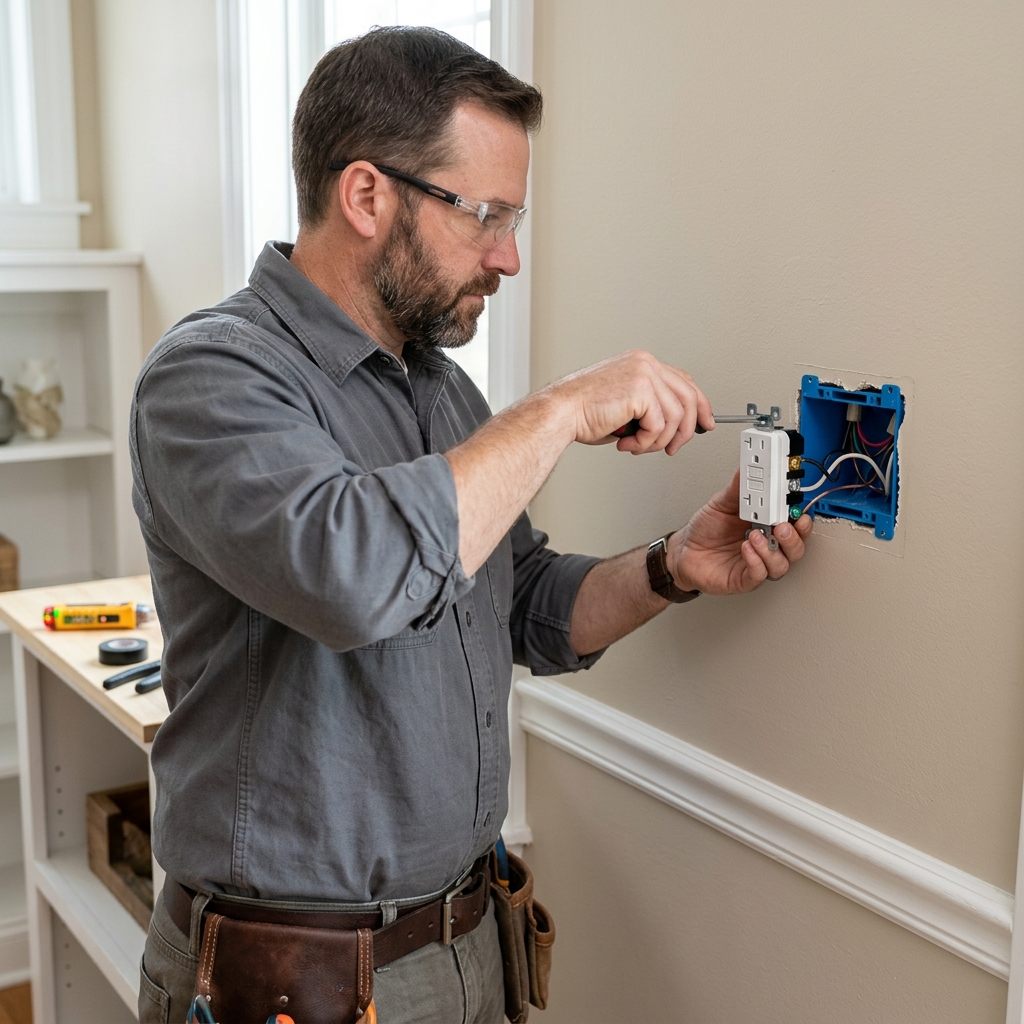
Electrical outlet replacement in McAllen comes up more than most people expect. Outlets wear out, get damaged, and sometimes were never installed right to begin with. McAllen has a mix of newer homes in Sharyland and north McAllen and older stock in south McAllen and downtown. The age of the home usually shapes what kind of outlet work is needed.
We replace standard outlets, GFCI outlets, USB outlets, 20-amp outlets, and outdoor outlets. We work on homes and commercial properties across McAllen and the surrounding area. Outlet replacement is one of our property maintenance services in McAllen.
Signs an Outlet Needs to Be Replaced
Some signs are obvious. Others are easy to miss until something goes wrong.
- Loose plug fit. Plugs don’t grip the outlet or fall out on their own. This usually means the internal contacts are worn.
- Discoloration or burn marks. Brown or black marks on the outlet face point to heat damage. Replace the outlet — and check the wiring behind it.
- Sparking when you plug in. A brief spark is normal. A large spark or one that lingers is not.
- No power from the outlet. First, check the GFCI reset button on the outlet itself or nearby. Then check the breaker. If neither fixes it, the outlet needs replacing.
- Warm or hot to the touch. Outlets should be room temperature. Warmth means something is wrong with the connection or the circuit.
- Cracked or broken outlet body. A damaged housing lets dust and moisture into the wiring — especially an issue in South Texas humidity.
Warm outlets and burn marks are worth taking seriously. Those two signs can point to a problem behind the wall, not just the outlet face. When we come out, we check the wiring at the same time.
Outlet Types We Replace in McAllen
Not every outlet is the same. Here’s what we work with:
- Standard 15-amp duplex. The most common type. Found in living rooms, bedrooms, and hallways.
- 20-amp outlets. Identified by a T-shaped slot on one side. Required on kitchen and laundry circuits. The outlet and the breaker must match.
- GFCI outlets. Have TEST and RESET buttons on the face. Required in kitchens, bathrooms, garages, and outdoors. Protect against shock from ground faults.
- USB outlets. Replace a standard outlet with one that includes built-in USB ports. A common upgrade in bedrooms and home offices.
- Tamper-resistant outlets. Have spring-loaded shutters inside the slots. Required in new residential construction under the National Electrical Code.
- Outdoor outlets. Need weatherproof in-use covers and GFCI protection. South Texas heat and humidity wear these out faster than most people expect.
We identify which type you need before we start. Not every swap is identical, and using the wrong outlet type causes problems down the road.
GFCI Outlets — Where They’re Required
A GFCI outlet monitors the flow of electricity through a circuit. When it detects a difference — even a small one — it shuts off power in a fraction of a second. That response time protects against shock and electrocution [1].
The National Electrical Code (NEC) requires GFCI protection in areas where water and electricity can meet. That includes:
- Kitchen countertop receptacles
- Bathrooms
- Garages and unfinished basements
- Outdoor outlets
- Laundry areas
Older homes in McAllen — especially those in south McAllen and downtown — often don’t have GFCI in these locations. They were built before the requirement existed. That’s a gap worth closing, not just for code reasons but for safety.
One GFCI outlet can protect other outlets downstream on the same circuit. That means you don’t always need to replace every outlet in a bathroom — sometimes one correctly wired GFCI covers the rest. We identify that when we assess the circuit.
Two-Prong Outlets in Older McAllen Homes
Homes built before the mid-1960s often have two-prong outlets. Those outlets have no ground wire. That limits what you can safely plug in, and it creates problems for surge protectors and some electronics.
The National Electrical Code allows upgrading from two-prong to three-prong using GFCI protection — no full rewiring required. The outlet must be labeled “No Equipment Ground” after the swap. This is the most practical solution for older homes in Palmhurst or south McAllen where rewiring the whole house isn’t on the table.
One more thing worth knowing: homes built between 1965 and 1973 may have aluminum wiring. That was common nationwide during a copper shortage. Aluminum wiring expands and contracts more than copper. Over time, that loosens outlet connections and raises fire risk. If your home is from that era and outlets run warm or trip breakers often, the wiring needs to be evaluated — not just the outlets. CO/ALR-rated devices are required for aluminum-wired circuits. We check for signs of aluminum wiring during our visit. If we find it, we’ll tell you what needs to happen next.
DIY vs. Hiring a Professional
Some outlet work is straightforward. Some of it is not.
DIY-friendly:
- Swapping one standard 15-amp outlet for another of the same type
- You’re comfortable with basic electrical work and know to shut off the breaker first
Call a professional:
- GFCI outlets (LINE and LOAD terminals must be wired correctly — wrong connections mean no protection)
- 20-amp outlet upgrades (the circuit breaker must also be 20-amp — they’re a matched pair)
- Any outlet that runs warm, shows burn marks, or has sparking
- Homes from the 1965–1973 era with possible aluminum wiring
- Outdoor outlet installs, especially where a new circuit or weatherproof box is needed
- You’re not sure what’s behind the wall
We assess first. You know what the job involves before we start.
Frequently Asked Questions
How do I know if my outlet needs to be replaced or just reset?
Start with the GFCI reset button — either on the outlet itself or on another outlet on the same circuit. Then check the breaker panel. If neither restores power, the outlet itself likely needs replacing.
Can a handyman replace electrical outlets?
Yes. Replacing standard and GFCI outlets falls within handyman scope. More involved work — running new circuits, panel upgrades, or full rewiring — requires a licensed electrician. We’ll tell you upfront which category your job is.
What is a GFCI outlet and do I need one in my kitchen?
A GFCI outlet detects differences in current and shuts off power instantly to prevent shock. The NEC requires GFCI outlets at all kitchen counter receptacles. If your kitchen outlets don’t have them, that’s a code gap — and a safety one.
What if my outlet feels warm to the touch?
Stop using it. A warm outlet can mean a loose connection, an overloaded circuit, or a wiring problem behind the wall. It’s one of the few outlet symptoms that often signals something beyond the outlet itself. We check the wiring when we come out.
How long does outlet replacement take?
A single standard outlet swap takes 15 to 30 minutes. GFCI outlets and outdoor installs take a bit longer. If several outlets need attention, we work through them in one visit.
[1] U.S. Consumer Product Safety Commission — “Electrical Safety” — https://www.cpsc.gov/safety-education/safety-guides/home/electrical-safety
Need This Service?
Call now for a free estimate. Same-day service available in McAllen.